Why Community is the Missing Layer in Employee Experience
Culture
Updated on
April 20, 2026
by
Margaux Morgante

X min
Culture
Updated on
April 20, 2026
by
Margaux Morgante
X min
Most companies invest in culture but fail to create real belonging because community is fragmented. Spaces in Kudos solves this by giving employees a dedicated place to connect, participate, and build culture together—driving engagement, retention, and performance.
Most companies think they have a great culture.
They have internal newsletters, a legendary annual holiday party, and informal Slack and Teams channels no one uses.
But when a new employee joins, one thing is still missing: A place to actually belong.
Recognition helps people feel valued, and good internal communication helps people stay informed. But community is what makes people feel like they’re part of something.
In most organizations, community doesn’t have a real home. It’s scattered across tools, buried in channels, or dependent on a handful of organizers to keep it alive.
That’s the gap. And it’s why so many companies invest in culture but still struggle with employee connection and belonging, especially with the prevalence of hybrid and remote teams.
Most workplace culture is still designed to be consumed, not participated in. It shows up in ways you’ve probably seen:
Individually, these moments matter; but they don’t build connection at scale.
And the impact is real: According to Forbes, two-thirds of employees report feeling no sense of community at work.
This matters because when people don’t feel connected:
On the flip side, when community is present, the outcomes are measurable:
John Baldoni for Forbes explains, “People feel this greater sense of thriving… they’re far healthier, have much less burnout, and are much more likely to stay.”
In one example, Baldoni shared that simply investing in connection and shared experiences led to a 25% increase in performance.
The takeaway is simple: Community isn’t a “nice to have.” It’s a performance driver.
Belonging doesn’t come from watching culture happen. It comes from being part of it. From contributing, reacting, sharing, and seeing yourself reflected in the experience.
👉 Reading an update vs. joining a conversation
👉 Seeing a celebration vs. adding your voice to it
👉 Hearing about culture vs. helping shape it
This is where you design community. You can create the conditions where:
Because ultimately, the shift is this: Work shouldn’t feel like somewhere you go. It should feel like something you belong to.
Maslow’s hierarchy of needs puts social belonging near the center of what human beings need, right alongside love, affiliation, and acceptance. In other words, the need to belong is not extra. It is not soft. It is not optional. It is part of how we are built.
A sense of belonging is a fundamental human need, and social connection has real effects on our mental and physical health.
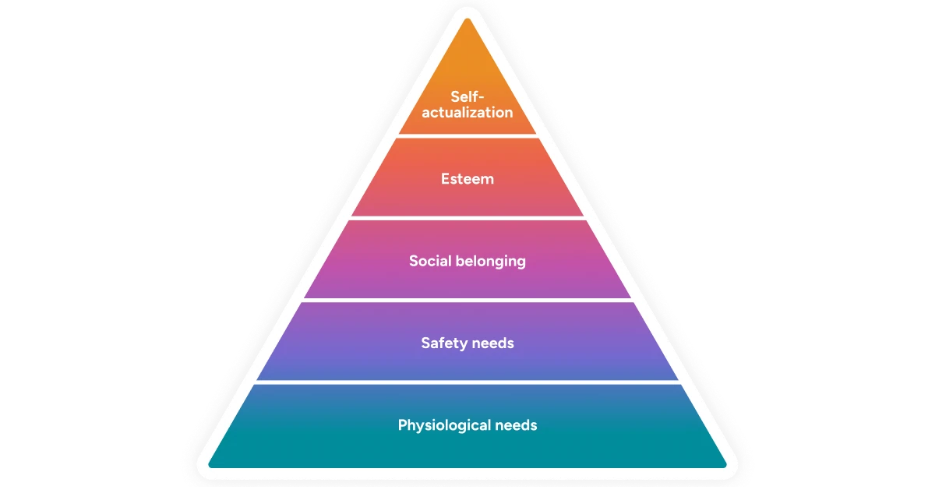
What does that actually mean at work? It means people need more than a paycheck, a job title, or even recognition alone. They need to feel that they are part of something.
They need to know there is a place for them here, that their presence matters, that they are connected to other people, and that they are not standing at the edges of the culture looking in. Belonging is the feeling that says:
When that feeling is missing, work can become isolating, even when communication is strong and the business is performing well.
That is why community matters so much. Human beings need community not only in life outside of work, but in the places where they spend so much of their time and energy. When people feel like they belong to a team, a culture, or a community, they are more likely to participate, contribute, and invest in what they are building together.
That’s exactly what Spaces is built to do.
Spaces is an interactive employee community hub built directly into Kudos.
It gives employees a dedicated place to connect around shared interests, identities and experiences, company moments and events, and whatever else shapes culture where you work.
Think:
All in one place, and inside the Kudos platform you already use for recognition.
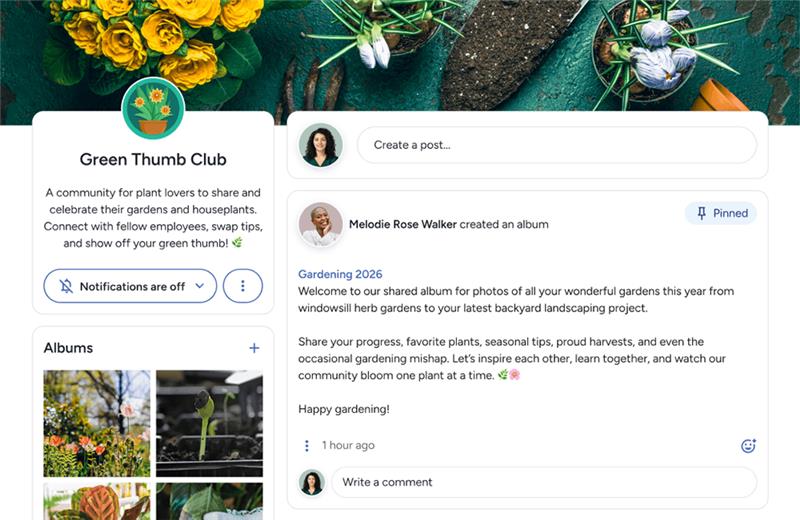
A new employee joins your company.
They log into Kudos and see more than recognition posts.
They see Spaces.
👋 There’s a “New Hires” Space where people are introducing themselves.
🍋 A “Wellness” Space sharing tips and challenges.
📷 A “Company Events” Space with photo albums from past events.
They join one, post something small, get a few reactions, and even a comment from someone in another office.
It’s a simple moment, but it changes something. They’re not just informed about the company, they’re now officially part of it.
The result: A stronger, more visible sense of belonging across your organization.
Recognition says: “I see you.”
Spaces says: “You’re part of this.”
Together, they turn culture into something employees can see, share, and participate in. That’s the difference between having a culture — and actually feeling it.
You can’t force community, but you can create conditions for it to grow.
.jpg)

Learn how to design a data‑driven recognition budget that boosts engagement, controls spend, and delivers measurable ROI.
Get Your Guide