Employee recognition is one of the most powerful tools a credit union has for reducing employee turnover, improving member experience, building community, and supporting a culture that reflects its mission.
This guide is for credit unions who want to build a recognition and rewards program that's meaningful, measurable, and values-aligned.
Why recognition matters in credit unions.
Credit unions aren't banks, and that distinction shapes everything about how you should approach employee recognition. Your CU exists to serve your community, not shareholders. The people behind your counters, your phones, your digital channels, and your back-office operations aren't just doing jobs. They're delivering on a mission. And when those people feel unseen or undervalued, it does more than just hurt your culture - it hurts your members too.
Its people and the relationships they build.
Your members choose you because they trust you. That trust is built person by person, interaction by interaction, over years of service. It's built by the teller who remembered someone's name. The loan officer who took extra time to explain an option. The team behind the scenes who processed a mortgage so a family could close on time.
The people challenges credit unions face.
We understand the pressures credit unions face, and the challenges that are being navigated in a labor market up against larger banks and financial institutions.
Turnover is costly.
When a branch employee leaves, you're not just replacing a body — you're rebuilding relationships, retraining for compliance, and absorbing the morale hit felt by the colleagues they left behind.
→ Replacing an employee can cost up to 200% their annual salary.
(America’s Credit Unions, 2026)
Competition for talent is fierce.
Credit unions frequently compete for talent with larger banks. Which means the value proposition for credit unions must be unique and meaningful — and culture is one of the most powerful differentiators available.
→ 61% of workers in the financial services industry are actively job hunting.
(BambooHR, 2026)
Rapid growth + remote and hybrid work create connection gaps.
When your growing teams are spread across branches, or working hybrid and remote schedules, the informal moments of recognition don't happen naturally. Without intentional structure, recognition becomes inconsistent.
→ 96% of the credit union leaders expect their institutions to grow in the next 12 months
(Wipfli State of Credit Unions Report, 2025)
Generational expectations are colliding.
Gen Z and Millennial employees — now the majority of the workforce — rank workplace culture, purpose alignment, and feeling valued as top factors in staying at an organization. Recognition isn't a perk to them, it’s an expectation.
→ Lack of recognition is the #2 driver of job-related stress for Gen Z and Millennials
(Deloitte, 2026)
Compliance and regulation pressures are ongoing.
Credit union employees are doing serious, high-stakes work. Mortgage lending, fraud prevention, member services under emotional circumstances — these roles carry real pressure. When that goes unacknowledged, burnout follows.
→ 68% of workers in the financial services industry are burnt out
(E-Monitor, 2026 Workforce Analytics)

The business case: recognition ROI for credit unions.
The Kudos 2026 Recognition Impact Report proves measurable return on investment for recognition in the workplace. For credit unions making the case to a board or a CFO, the data is on your side.
- → 91% of leaders say recognition through Kudos is aligned through their company values
- → 60% of employees feel more appreciated for their contributions
- → 51% of employees say recognition improves their sense of belonging and inclusion
→ Read the full Kudos 2026 Recognition Impact Report
For credit unions, these numbers translate directly. Higher engagement means stronger member interactions, fewer errors, better loan quality, and lower turnover.
When you factor in the true cost of turnover — replacement costs, lost institutional knowledge, onboarding time, the productivity dip while a new hire ramps — a recognition program that reduces turnover by even a few percentage points can deliver a meaningful financial return.

The connection between member experience and employee experience.
Your member experience strategy and your employee recognition strategy aren't separate programs. They're the same program, viewed from different angles.
Recognition is one of the most direct investments you can make in the sustainability of that experience.
United Bay Community Credit Union, a long-standing Kudos client, was named a winner of the Best Consumer Lending Experience Award — given to credit unions that consistently provide exceptional member service. Their investment in employee culture and recognition wasn't coincidental to that outcome. It was the foundation of it.
→ Case Study: United Bay Community Credit Union Full Results & Impact
Happy, engaged employees deliver better member service. This shows up in the numbers credit unions track most closely: member satisfaction scores, Net Promoter Scores, and service quality awards.
When employees feel valued, they extend that care to the people they serve. When they feel burned out, overlooked, or disconnected from the mission, members feel it too.
Credit unions were built on the idea that people are better served by institutions rooted in the communities around them. That mission shapes everything — from the products you offer, to the causes you sponsor, to the way your teams show up for the people and neighborhoods you serve.
When your employees feel genuinely connected to each other and to a shared purpose, they become an extension of the community values your credit union stands for. When they don't, the mission becomes a marketing statement rather than a lived experience.
What lack of community looks like in distributed credit unions:
- A loan officer in one branch doesn't know what the team across town is celebrating.
- A back-office analyst working remotely has no visibility into the member story that a frontline team handled beautifully this week.
- A new hire three months in still isn't sure what the organization values.
Building internal community with Kudos Spaces.
Kudos Spaces are dedicated community hubs inside the Kudos platform — places where teams can gather around shared interests, organizational initiatives, wellness programs, DEI commitments, and anything else that matters to your people.
For credit unions, this is a natural fit. Think about what you're already doing:
- Wellness programs
- Community and volunteer efforts
- Financial literacy initiatives
- Diversity and inclusion commitments
- Local causes you champion
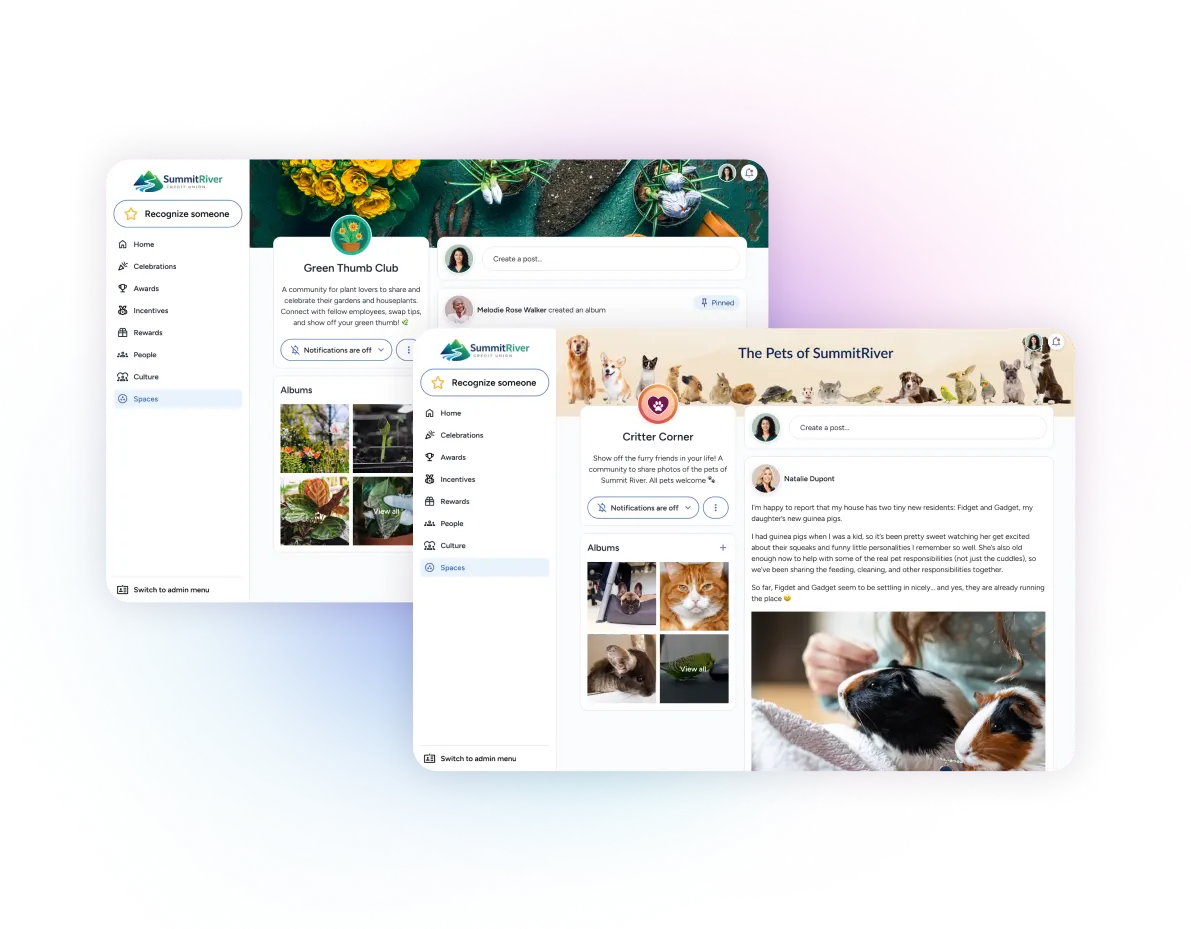
Spaces gives those things a home inside your platform. A place where employees can connect around them, share what they're doing, and see that their colleagues are showing up for the same things they care about.
United Bay Community Credit Union put this into practice in ways worth examining closely. Their Wellness Wednesday program lives inside a Kudos Space, where health tips, resources, and recipes are shared every Wednesday morning. Employees receive alerts and engage with the content throughout the day. Their DEI commitments are lived out through monthly Spaces posts highlighting celebrations and important awareness months — Hispanic heritage, Black history, disability awareness — with employees commenting and sharing how they're celebrating, creating the kind of organic conversation that makes inclusion feel real rather than performative.

It's not just about recognition. Diversity, Equity and Inclusion is very important to us. Using Kudos as a tool to showcase celebrations shows our company that we care and support a wide range of causes.
Leslie Webb
VP of People & Strategy,
United Bay Community Credit Union (Ubay)

Community shows up in the milestones too.
Credit unions run on relationships built over time. A longstanding employee is someone who has seen the organization through change, built member relationships that span years, and carries institutional knowledge that can't be trained into a new hire in 90 days.
Milestone recognition is community-building. When Ubay's CEO records a monthly video acknowledging every staff birthday and anniversary — and the whole organization responds. That’s a signal that long tenure is valued, that the organization notices the people who stay.
Community extends outward.
Many credit unions are deeply involved in their local communities, and this community involvement is reflected internally. When a team shows up for a charity event, when employees volunteer together, when the credit union makes a community impact — those stories show up through recognition. They connect the organization's external mission back to the people who make it possible.
This creates something powerful: employees who can see that their work contributes to something larger than their role. That connection between purpose and daily work is one of the strongest drivers of engagement, and one of the things credit unions are uniquely positioned to offer.
→ Watch our latest product demo video to see Kudos Spaces in action
How to build a values-based recognition program.
Values-based recognition is the single most impactful structural decision you can make when designing a credit union recognition program.
The idea is straightforward: every recognition message is connected to a core value. In practice, the effect is profound. It turns your values from words on a wall into a living, daily record of how your culture operates.
Oregon Community Credit Union (OCCU) built their program around their values of being Tenacious, Humble, and Big-hearted. When team members give recognition in Kudos, they select the value the recognized behaviour reflects. The result: when OCCU conducted their first Gallup Q12 employee engagement survey, recognition ranked as their top organizational strength.
→ Case Study: Oregon Community Credit Union Full Results & Impact
The steps to build a values-based program:
- Anchor recognition to your values. Configure your platform so every message is tagged to a core value. This creates a searchable culture record and reinforces values through positive reinforcement rather than policy enforcement.
- Let leadership lead by example. Culture scales from the top. When your CEO and senior leaders are actively recognizing employees it signals that this is real, not performative.
- Be consistent, not just ceremonial. Small, specific, timely acknowledgments sent consistently throughout the year have a more lasting impact than one big moment.
- Remove barriers or friction. Giving recognition should be simple and easy for everyone in your organization, whether they’re remote, hybrid or frontline.
- Make recognition visible. When people can see who's being recognized, for what, and why, it creates a shared understanding of what great looks like and surfaces contributions that might otherwise go unnoticed.
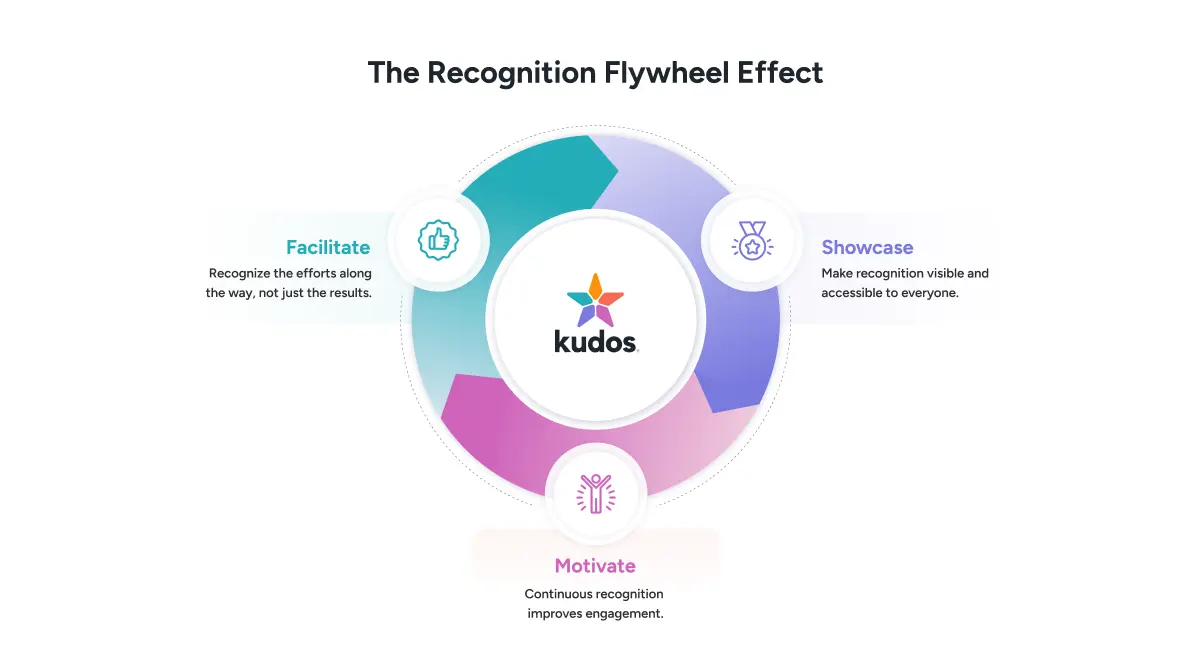
Recognition across credit union roles.
Recognition that resonates with a loan officer is different from what lands for a member services representative or a back-office analyst. Here's how to think about recognition across your key roles.
Frontline Branch Staff
These are the people your members see. They're managing a high-volume of interactions, often under pressure, with varying emotional stakes. Recognition here should be timely, specific, and visible.
Lending and Mortgage Teams
Lending teams operate against performance targets, and recognition is a powerful way to celebrate milestone achievements without defaulting to purely financial incentives.
Back-Office and Support Functions
Risk, compliance, IT, finance, HR, marketing — the people who make everything else possible. A strong recognition program surfaces their contributions, ensuring that the people who never interact with a member directly still feel connected to the mission and appreciated for their role in it.
Multi-Branch, Hybrid and Remote Employees
Recognition in distributed and hybrid credit union teams requires intentional infrastructure. The specific challenges:
- Recognition that lives in email or a manager's memory doesn't scale across branches.
- A new hire working remotely can't observe your culture, they can only be told about it.
- Without regular touchpoints, distributed employees drift toward disengagement and start to feel like a function rather than a person.
For team members who aren't at the main branch or who work remotely, recognition is one of the most powerful tools for maintaining connection. Leaders can see what is happening across branches, celebrate it, and use data to understand workload and workflow across the entire organization.
A recognition platform that's accessible on any device and integrated into the tools your teams already use doesn't just solve the logistics of distributed recognition. It rebuilds the cultural connective tissue that distance erodes.
Kudos integrates with Microsoft Teams, Slack, and your HRIS so recognition meets your teams where they already work. Book a demo to see it in action →
Rewards that complement recognition.
Recognition says: We appreciate you.
Recognition + reward says: We're willing to put something behind that appreciation. In credit unions, a meaningful rewards program gives you a competitive tool that doesn't just add to salary — it adds to experience.
- Choice matters more than dollar value: Effective rewards programs offer genuine choice (gift cards, merchandise, experiences, charitable donations).
- Rewards should complement recognition, not replace it: Genuine acknowledgment of someone's contribution is what people remember. Build the recognition culture first.
- Tie rewards to meaningful milestones: Accomplishments like lending goals, service anniversaries, compliance training completions, fraud prevention. When rewards are connected to specific achievements, they carry more weight.
- Don't underestimate non-monetary recognition: Public shout-outs, CEO messages, nominations for awards programs — these cost nothing and often mean more than a gift card.
- Tax considerations matter: If you're operating a formal rewards program with points and redemptions, make sure it's designed with the relevant tax rules in mind for your jurisdiction.
We’ve developed a calculation that allows you to easily quantify the ROI of recognition. The calculation shows a substantial return on investment, emphasizing the effectiveness of recognition in creating a strong culture and fostering employee engagement.
People analytics: making recognition measurable.
Every recognition message sent on your platform is a data point. Aggregated over time, that data tells a story: about where your culture is strong, where it's fragile, and what needs attention.
What recognition analytics can tell you:
Participation gaps. Which teams, branches, or departments are giving and receiving recognition at lower rates? Low recognition activity is often a leading indicator of disengagement.
Manager behaviour. Are your managers actively recognizing their teams? Analytics let you see which managers are engaging with the program and which aren't.
Values alignment. When every message is tied to a core value, you can measure which values are being lived most actively and where gaps exist. This is qualitative culture insight expressed as quantitative data.
High performers. Ubay's HR team found that recognition data helped them identify growth-minded, high-performing employees who might otherwise have gone unnoticed.
Engagement trends over time. Before-and-after comparisons become trackable and reportable. You can show your board that the investment in culture is working.
Credit union client stories and testimonials.
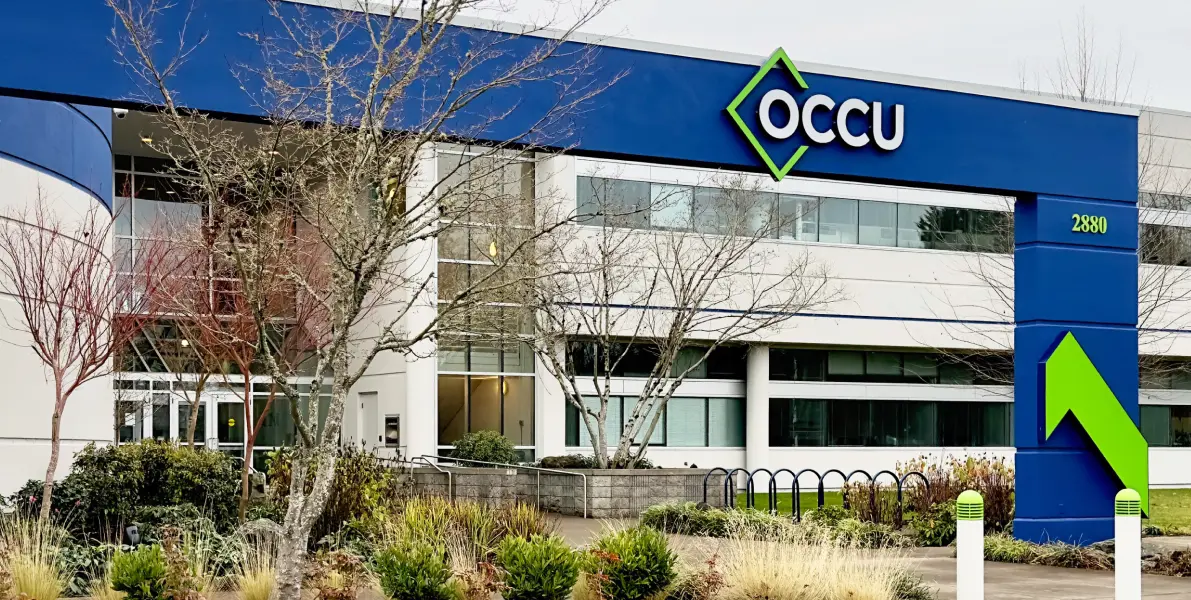
Oregon Community Credit Union (OCCU)
Oregon, United States | 800+ employees | Kudos client since 2021
OCCU's goal was clear: build a sustainable, consistent recognition program for a workforce that had shifted to remote and hybrid work. Their values — Tenacious, Humble, and Big-hearted — were the foundation.
OCCU results & impact:
- Nearly 100% platform participation
- 141,000+ recognition messages sent since implementation
- 95.6% employee retention rate
- Recognition ranked #1 strength in their first Gallup Q12 survey
- #25 on Oregon Business 100 Best Companies to Work For (2023)
- Brandon Hall Group Excellence Award for Best Advance in Rewards and Recognition Technology (alongside Kudos)
- Kudos Best Culture Award winner
At OCCU, our values of being Tenacious, Humble, and Big-Hearted are displayed every day by our team members. In partnering with Kudos, our focus on providing an industry-leading employee experience has been magnified by providing a tool for our team members to recognize and celebrate the tremendous efforts they give every day in service of our members.
Russ Kukini
Employee Engagement Business Partner,
Oregon Community Credit Union (OCCU)
→ Read OCCU’s full case study

United Bay Community Credit Union (Ubay)
Bay City, Michigan | 51–200 employees | Kudos client since 2020
Ubay built their recognition program around a Cohesion Culture™ framework — belonging, value, and mutual commitment — with every Kudos message required to connect to a core value.
Ubay results & impact:
- Holds a 4.8 out of 5 rating on Glassdoor
- 100% enrolment across all branches
- 86,000+ engagement activities across their platform
- “Teamwork” is their top value recognized
- Recognized as a Top Workplace by Detroit Free Press (2023)
- Kudos Best Culture Award winner
Affirming each other regularly on Kudos motivates us to form strong attachments and gain a sense of accomplishment through achievement. Providing rewards for that commitment through Kudos is the cherry on the cake.
Leslie Webb
VP of People & Strategy,
United Bay Credit Union (Ubay)
Kudos has helped us improve our employee retention and performance. Employees really lift each other up on Kudos and appreciate when their managers recognize them publicly.
Michelle LaClair-Ziembo
Human Resources Manager,
United Bay Credit Union (Ubay)
→ Read Ubay’s full case study
Getting started: what Kudos can do for credit unions.
Choosing the right recognition platform is a decision that will shape your culture for years. Here's how Kudos can better the employee experience through recognition for credit unions:
- Values integration. Every recognition message is tied to a core value. This is how you build a culture system instead of a compliment system.
- Multi-branch accessibility. Your platform will work equally well for someone at headquarters and someone in a branch two hours away.
- Peer and manager recognition. Peer-to-peer recognition in Kudos is genuinely easy and simple enough to become a daily habit.
- Milestone automation. Birthdays, work anniversaries, service awards trigger automatically, with notifications that prompt colleagues to join the celebration.
- People analytics. Participation rates, recognition frequency, values alignment, manager engagement, filtered by team, branch, or department. Culture data is business data.
- Community space. Kudos gives your people a shared space to connect around wellness, DEI, community involvement, and organizational culture.
- Security and compliance standards. Your recognition platform should meet the security standards you'd expect of any vendor in your ecosystem. Kudos is SOC 2 Type II and ISO 27001 certified.
- Dedicated customer success support. Through Kudos, you have ongoing support: someone helping you optimize, track results, and evolve your program over time.
Ready to see what this looks like for your credit union?
Book a 30-minute demo →
Frequently asked questions.
What is employee recognition in a credit union context?
Employee recognition in a credit union is the practice of acknowledging team members for their contributions, behaviours, and achievements in ways that are tied to the organization's core values and mission. This includes peer-to-peer recognition, manager recognition, milestone celebrations, awards programs, and rewards. Because credit unions are mission-driven and relationship-focused, recognition programs that connect to values and community tend to be most effective.
How does employee recognition improve member service
Recognized employees are more engaged, and engaged employees deliver better service. Research shows that highly engaged teams produce measurably stronger customer and member outcomes. Credit unions that invest in recognition cultures have documented improvements in member satisfaction scores, service quality awards, and Net Promoter Scores — because the employees who feel valued extend that care to the people they serve.
What is values-based recognition?
Values-based recognition ties every acknowledgment to a specific organizational core value. When an employee gives recognition, they select the value the recognized behaviour reflects — such as teamwork, integrity, or member focus. Over time, this creates a visible, data-rich record of how your culture operates in practice, turning core values from aspirational statements into measurable behavioural norms. Every recognition message sent in Kudos is tied to a company core value.
How do credit unions measure the ROI of a recognition program?
The most straightforward ROI framework tracks the reduction in employee turnover against the cost of the recognition program. Even modest improvements in retention can significantly outpace program costs. Additional metrics include employee engagement scores, participation rates on the platform, Glassdoor ratings, and performance indicators like member satisfaction. People analytics built into a platform like Kudos make this tracking accessible.
How does recognition help with employee retention in credit unions?
Recognition addresses one of the most common reasons employees leave: feeling undervalued. Credit unions that build consistent recognition cultures see measurable retention improvements. Oregon Community Credit Union, for example, achieved a 95.6% employee retention rate after building a recognition program with Kudos — a result they describe as best-in-class.
Can recognition programs work for distributed and multi-branch credit unions?
Yes — and for distributed organizations, a platform-based recognition program is especially important. When recognition depends on physical proximity or individual manager memory, it becomes inconsistent across locations. A platform ensures recognition is visible, accessible, and flowing regardless of where employees are working.